
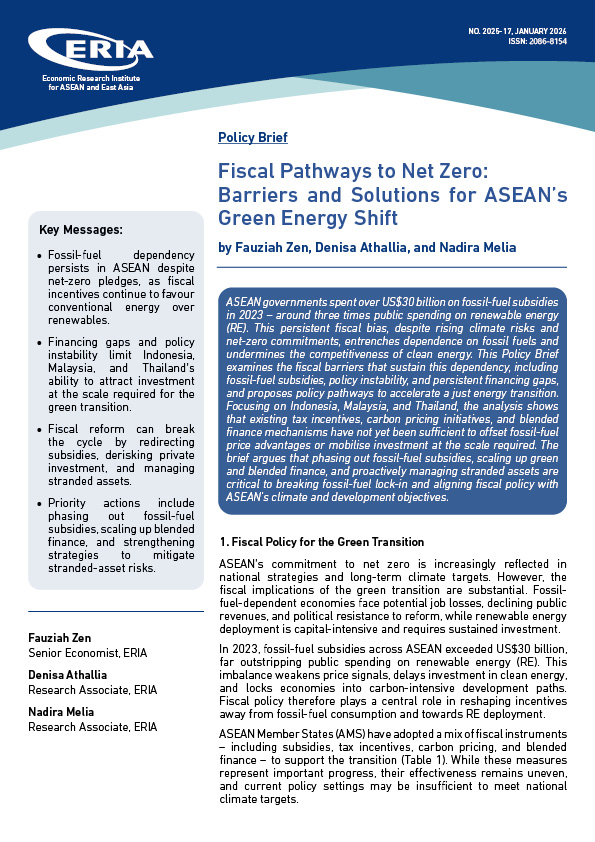
Fiscal Pathways to Net Zero: Barriers and Solutions for ASEAN’s Green Energy Shift
Authors/Editors
Tags
ASEAN governments spent over US$30 billion on fossil-fuel subsidies in 2023 – around three times public spending on renewable energy (RE). This persistent fiscal bias, despite rising climate risks and net-zero commitments, entrenches dependence on fossil fuels and undermines the competitiveness of clean energy. This Policy Brief examines the fiscal barriers that sustain this dependency, including fossil-fuel subsidies, policy instability, and persistent financing gaps, and proposes policy pathways to accelerate a just energy transition. Focusing on Indonesia, Malaysia, and Thailand, the analysis shows that existing tax incentives, carbon pricing initiatives, and blended finance mechanisms have not yet been sufficient to offset fossil-fuel price advantages or mobilise investment at the scale required. The brief argues that phasing out fossil-fuel subsidies, scaling up green and blended finance, and proactively managing stranded assets are critical to breaking fossil-fuel lock-in and aligning fiscal policy with ASEAN’s climate and development objectives.
Latest Multimedia
Latest News
- No news found.
Latest Publications


